

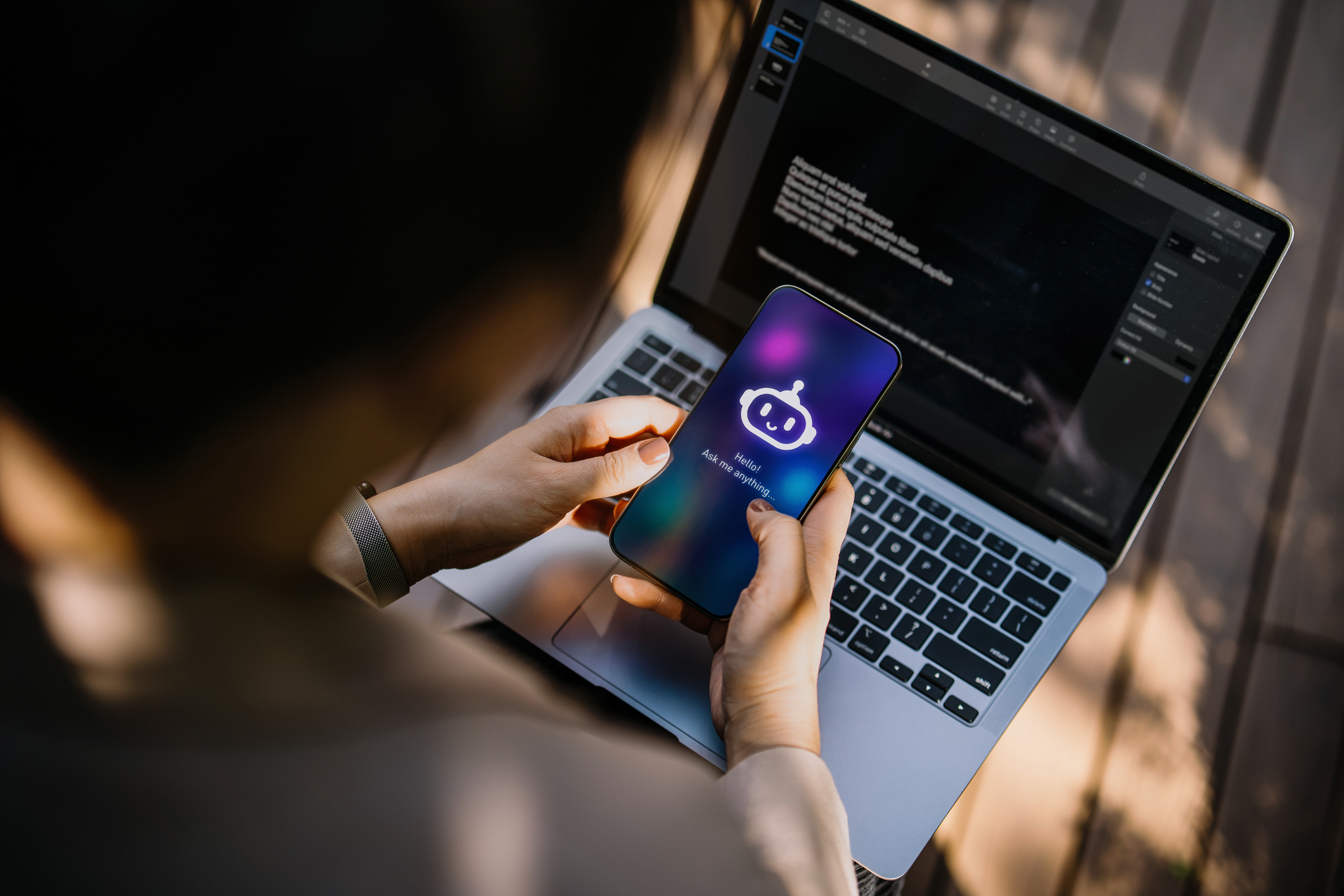
A chatbot can draft a speech for you to use at your daughter’s 21st birthday. But if you need your windscreen replaced, your roof repaired or a tooth filled, it will be completely useless.
That difference could have a significant bearing on which occupations offer the greatest job security in the years ahead.
AI is starting to leave some white-collar workers feeling rather blue.
It is challenging some long-held assumptions about which jobs are secure.
Many office-based jobs involve writing, gathering information, communicating and analyzing material. And those tasks are all things AI chatbots are becoming increasingly good at.
Loading...
Work that once required hours of research, drafting or checking can now sometimes be completed in a fraction of the time–even though human oversight of AI outputs is still essential.
It seems that white-collar occupations are at greater risk of being what might be called “bot-bumped”. That means having some of their work taken over by artificial intelligence.
On the other hand, jobs involving hands-on work appear to be far less exposed to the threat posed by AI. And that makes them relatively “bot-proof”.
Recent research undertaken by Microsoft suggests the divide between bot-bumped and bot-proof jobs could be wider than many people realize.
Microsoft researchers analyzed 200,000 conversations between people and its Copilot chatbot.
They looked closely at the types of tasks people were asking AI to perform. They also considered how successfully the technology could carry them out.
The researchers then compared those activities with the job statements and major job tasks involved in hundreds of different occupations.
The overall goal was to identify which jobs had the greatest overlap with AI capabilities.
At the top of the list were interpreters and translators, historians, passenger attendants and sales representatives.
They were followed by writers and authors, customer service workers, computer-controlled machine tool programmers, telephone operators, ticket agents and travel clerks, and radio announcers and DJs.
Many of these jobs involve the tasks of gathering information, writing, communicating with customers or providing advice.
These are all activities that AI is becoming increasingly capable of performing–although not always accurately.
And that point raises questions about how much of this work will continue to require human involvement.
At the other end of the scale were workers who take blood samples, nursing assistants and hazardous materials’ removal workers.
Other occupations with very little alignment with AI chatbots included painters’ and plasterers’ helpers, embalmers, plant and system operators, oral and maxillofacial surgeons, automotive glass installers and repairers, ship engineers and tire repairers.
What these occupations have in common is that they involve significant amounts of physical work, practical skills or direct contact with people.
While AI might help with certain aspects of these jobs, it cannot take a blood sample, replace a damaged windscreen, repair a tire or perform surgery on its own.
The findings suggest that some white-collar workers might now have more reason to worry about their job security than the blue-collar workers whose careers were once considered less secure.
But the greater risk for some office workers might not be losing their jobs altogether but finding that fewer people are needed to do the same amount of work.
And while some jobs might disappear, others will change significantly as AI takes over more routine tasks.
It’s also true that some entirely new occupations are likely to emerge as businesses find different ways to use the technology.
But the findings do suggest that jobs involving physical work could become increasingly attractive.
Oh, and it is worth pointing out that being bot-proof does not mean being protected from every form of automation–forever.
It’s true that robots and other technologies could eventually take over some physical tasks.
But for now, many hands-on occupations remain beyond the practical reach of AI chatbots.
And that could make getting your hands dirty a safer career bet than keeping them clean behind an office desk.
