

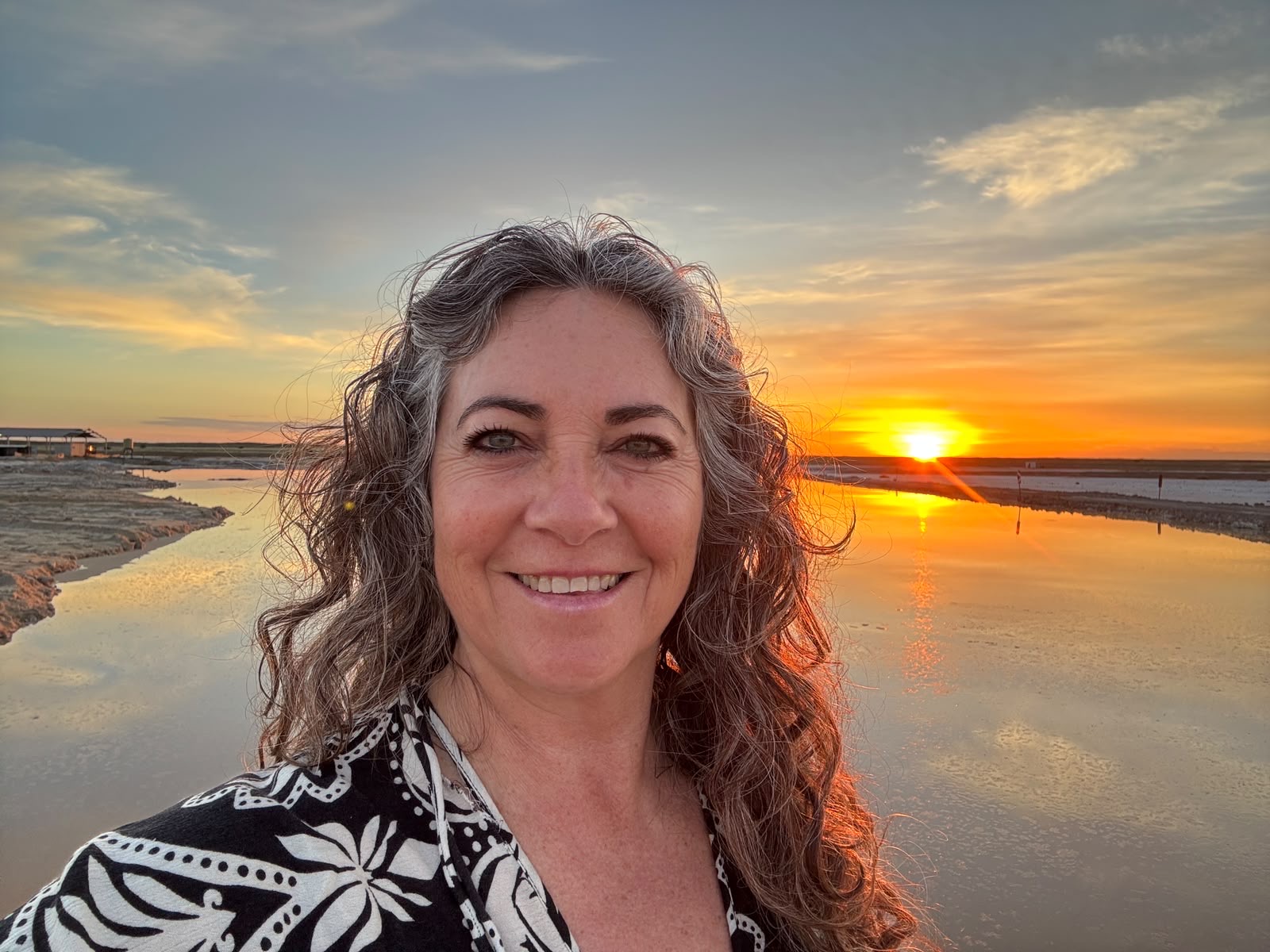
In South Africa’s Northern Cape province, two-and-a-half hours north of Upington, where the Kalahari Desert stretches towards the Namibian border, lies a salt pan–a flat, dry lakebed that turns white with crystals in the summer heat. Beneath it sits a 55 million ton underground aquifer, and the salt drawn from it now sells in more than 20 countries, including the United States, under the Oryx Desert Salt brand Samantha Skyring built.
“This ancient aquifer is so clean and so untouched, and because of the temperatures, it crystalizes in one lunar cycle,” says Skyring, its founder and CEO. “It really is a phenomenon. Salt is a product that every single person uses every single day of their life.”
Sixteen years ago, Skyring sold her Johannesburg home, bought 34 tons of salt and, as a single mom, packed grinders in the garden shed she lived in in Noordhoek in Cape Town. Pick ‘n Pay came first, and Woolworths followed–on her terms. “I had a bit of an attitude. I said, ‘I’m not going to phone you, you’re going to phone me’,” she laughs. “And they did.”
The United States (U.S.) now makes up about 45% of her sales. Oryx has been in Whole Foods Market for six years and World Market for two, and it arrived in Natural Grocers in August. So, when Covid-19 wiped out 60% of sales, Skyring had already spent five years building a network of close to 6,000 food editors and influencers on both coasts through LinkedIn. “I always knew that one day I was going to launch in the U.S. and I would need a network,” she says. “Now the question is how we grow the next global household brand.”
Compared with desert salt, sea salt comes from much less salty water in cooler coastal conditions, so it takes longer to harvest. But according to a new study in the Applied Food Research journal, it also carries higher concentrations of microplastics.
Loading...
Celtic salt, the ‘healthier’ social media favorite, is harvested on the French coast near the English Channel, which Skyring says is one of the busiest (and most polluted) shipping routes in the world. There was reportedly a class action lawsuit around its alleged heavy metals levels in 2025.
“There’s actually quite a crisis in the salt sector,” she adds. Table salt, the alternative, is so highly refined that Skyring says it should be classified as an industrial product. “It really should be called sodium chloride with chemicals,” she says. “Calling it salt is like pouring someone balsamic vinegar with their steak and telling them it’s a good cabernet because it’s made from grapes.”
Skyring believes it takes 20 to 30 years to build a legendary business so, by her count, Oryx is about halfway there. What she would really love is to see Oryx on African airlines (and thinks it is a particularly good fit for Qatar Airways, the Middle Eastern carrier that also uses an oryx as its emblem).
She already supplies JetBlue, one of the more popular low-cost airlines in the U.S. “For that extra one or two cents, it elevates your whole tray and gives it value,” she says. Last year, Skyring exited investors who had been with her for 12 years and brought in a new one for growth, and she has hired a sales manager with networks across southern Africa and the Middle East.
A percentage of the company’s profits goes to the indigenous Khomani San and Mier communities in the Kalahari Desert. “I love that this resource leaves Africa and goes to America, but there are funds that come back in and make a difference,” she adds. “It is the smallest ingredient in any meal, but it has the biggest impact.”
